mean girls & gap moe

Something I’ve been meditating on a lot as I work through some revisions is the mean girl. More broadly, the idea of the mean girl and what it means for a character to have dimension.

The mean girl is never just the mean girl. She’s acting a certain way because she wants something just as much as the protagonist does (and it’s very likely that the protag is getting in her way). The more you can narrow in on a) what she wants and b) why she wants it (as well as the other things in her life that she’s having to deal with) the more dimensions you have on your character.

Perhaps you’ve heard of people commenting that characters in your favorite book felt really three-dimensional, or maybe that characters in a different book really didn’t. What’s that mean from a writing standpoint? What’s the takeaway?

A great example of this is Valentina from Leigh Bardugo’s THE FAMILIAR. Is she mean? Yes! Is she directly opposed to our protagonist? Yes! Do we understand why she’s doing all the mean things she does? Absolutely.

I would casually define character dimensionality as how much the reader understands or gets to see who this person is outside of their leverage on the plot.

You may have experienced some heavily plot-driven stories where the characters don’t feel very fleshed out beyond their contributions to moving the plot forward. This man is the love interest (assassin). This girl is the princess (ice queen). They are going to be enemies-to-lovers but first they need to fake a marriage. Often, characters are little more than tropes in these scenarios.

This is the mean girl: her whole purpose in written life is to be a dick to the (usually female, usually lovable) protagonist.

Unfortunately, it makes the mean girl singularly uninteresting as a character if that’s all she is. The resolution to any conflict she’s a part of is either a) she needs to get over herself and her weird obsession with the protagonist’s behaviors or b) the protagonist has to “win” over her somehow, establishing the protagonist’s place on the mean girl’s pecking order. Especially if the protagonist is already involved in her own exciting conflicts, then the mean girl’s actions become just…annoying. An extra bother. She is a secondary character who contributes nothing to the reader’s enjoyment of the story more than inconvenience.

No one is cheering for the mean girl, and that is a huge problem.

Why? We’re supposed to hate the mean girl, right?

Sure, if all we know about her is that she’s the one who is going out of her way to be awful for no reason. That’s not just mean, that’s tedious. Some days I feel like all my writing advice can just be summed up as don’t be tedious. What does tedious mean here? Giving me a conflict I already know the ending to.

We all know how mean girl conflicts go. Mean girl is mean. Protagonist’s life worsens, usually unrelated. Protagonist does main plot arc, acquires thing mean girl wants or powers to save the world and also conveniently defeat mean girl. Mean girl leaves. Protagonist’s life improves.

If all your mean girl is is a lever to putting social pressure or expectation on the protagonist, then yes, she’s going to be boring. She only has one dimension and that dimension is mean girl.

How do we fix it? Give them more traits and more impact outside of just being mean.

Valentina is Luzia’s employer in THE FAMILIAR, but she’s also really good at embroidery and sewing. She loves fancy clothes, even if she doesn’t get the chance to wear many of them due to her noble but reduced circumstances. She’s bound by rules and social structures, but as much as she upholds them she hates some of them as well. She has a really interesting conflict of shaming other women for ignoring social mores while secretly wanting to do so herself.

Valentina’s inner turmoil with societal expectations isn’t anything related to the protagonist. It’s her own problem that informs her decisions, and it makes it much easier to empathize with her. She’s not just a mean girl, she’s someone in an unfulfilling marriage who’s grappling with life not turning out how she thought it would.

When we give a character more things to do that just fulfill a plot role (make protagonist’s life worse, communicate social status), that character feels more real. They gain dimension. Especially when we give them inner conflicts or traits that are oppose their actions (I want independence from expectations BUT if I can’t have that then I am going to reinforce them), they become a lot more interesting.

That said, this can also be a little counterintuitive. Isn’t a character supposed to act a certain way? Why are we giving them so many (sometimes contradictory!) traits? Isn’t this going to end up making character soup?

The trick to doing this is being intentional with your choices for conflict and then also asking a lot of “why” questions in character development. Continuing to use our example of the mean girl: why is she so obsessed with social status and expectations? Why is it so important to her? Is it the base of what makes her feel powerful? What does power look like to her, why does she need it? What worries her most about not having power– why is she so obsessed with keeping it?

When we start asking questions like that, we nail down what’s really important to our characters, much like you’ve no doubt done with your protagonist, love interest(s), antagonist, and other more major characters. The more characters (especially secondary ones) you can do this for, the more real these smaller characters are going to feel: they have interests and lives outside of what the reader sees. That’s the whole trick: you want to convince your reader that your characters’ lives go on when they’re not looking, like they’re just seeing little snippets of these interesting people’s emotions and lives whenever they read your stories.

We’ve covered what a three-dimensional character looks like and the importance of moving toward a more fleshed out character from an initial trope, but how do you do that? What’s the tool?

You can do a lot of things here. You can kind of ideate and woolgather and see what comes together– it’s always fun to invent backstories for people.

For me, I enjoy poking at specific strands and subverting reader expectation. It’s always surprising and delightful (and feels true to life) when I find something I never would have thought would be true about a character in a book that I’m reading. Gap moe is a concept from Japanese related to that– it’s basically something that so directly contrasts with a character’s type that it can’t help but be endearing. Like, “how can you possibly like/do that?” There’s a gap between expectation and reality, like the mean girl who volunteers at a horse rescue and helps with riding lessons.

You don’t expect her to be kind and patient, or love something messy and giant like a horse, but there she is. She gains dimension because she’s not doing what you may think she’d do. You’re exploring a contradiction– hard vs. soft– like the assassin who enjoys gardening (death vs. life). You can also go the reverse way (the cinnamon roll who is the bug-smasher in the relationship and has no fear no matter the size of the insect).

Humans are contradictory creatures. While we often act certain ways, the most interesting parts are, of course, the exceptions. In exploiting an exception, you give a character room to be much more than the reader was bargaining for, and that’s what’s going to keep us reading.

As usual, if you liked this and you’d like to support my habit of chatting about craft, you can buy me a coffee below. Or, if you’re looking for a freelance editor for you fiction needs, I also offer editing services over at Constellation Editorial.


Buy Me a Coffee at ko-fi.com

know thy audience

What do we mean when we say it’s important that you know your audience as a writer?

This was something that I wrestled with as a younger writer– my audience was, obviously, whoever wanted to read my work! I wanted my stuff to attract as many readers as possible, so it didn’t make sense to put restrictions on who I thought my readers should be. However, I was also missing a few crucial points: what did I expect my readers to know? What were my readers coming to my work and hoping to find? Without knowing that, it’s hard to know where I was confusing people or disappointing them.

In short, I had little sense of what my readers’ expectations would be, precisely because I hadn’t defined very well who they were. I don’t mean that you have to have a super narrow focus if you don’t want to, but it’s important to know at least some baselines about the kind of people you imagine reading your work.

One important thing that this is going to impact is what I call the “barrier to entry” to your work. Think about it like a physics problem: in some cases, there’s a certain amount of potential energy that an object needs to overcome to be acted on or move. If a reader doesn’t come at your book with a certain amount of that potential energy, then they may not choose to continue reading.

Our knee-jerk reaction in this moment may be to say “oh no, what a terrible thing! I definitely need to make sure I always have a low barrier to entry with my work!” Understandable– we love accessible literature– but not always necessary.

Consider texts where the author is fluent in multiple languages, or makes pithy little asides in French or Latin. Do you need to know French or Latin to still be able to understand the story and enjoy the characters? No, definitely not. But if you want to get all the jokes and have a fuller reading experience, that’s certainly helpful knowledge to bring to the book. That’s helping you determine who your audience is.

A broad audience can also be detrimental to your work; it’s like trying to be the kid in class who appeals to everyone. To be likeable universally generally means being very bland. Even the things that seem to have wide appeal (like blockbuster franchises like Divergent, the Hunger Games, etc) don’t appeal to absolutely every person. For one, in both of those fandoms, you need to either like or be willing to read books about post-apocalyptic or dystopian young adults.

A narrow audience can also build a zealous fanbase. One of my very favorite reads of the last few years has been Tamsyn Muir’s Locked Tomb books. To get into the series, you probably like necromancy (again, a narrowing of the audience) and are fascinated with the idea of this in a space setting. You like appreciate a more complex plot and deep characters. Muir makes a lot of asides and jokes that center on memes or current internet culture– if you’re not chronically online, you may miss some (just as readers from the 1920s who didn’t have Latin or French might miss out on some funny Dorothy L. Sayers moments), but it’s not going to impede your understanding of the work. It’s just something that enables you to more fully enjoy it.

That said, there is a cost associated with knowing you’re missing out on joke after joke. In the case of another, unknown-to-you language popping up frequently through the text, you might google expressions or translate lines for a little bit (if the author doesn’t do it for you), but after a while you may decide that this is a little too much. Maybe it’s interrupting your reading process a few too many times to always pause and look things up. Maybe you stop looking stuff up, or maybe you stop reading.

Again, this isn’t necessarily bad (or good). It’s just observing what choices we might want to make when writing for a particular audience. If you’re writing for an audience that you can assume is mostly bilingual, then it may not make sense to translate everything in the secondary language! Where you meet your reader– how much help you give them, what you expect from them– is going to determine your audience as much as your content.

Will adding in translations or footnotes make your readers who already know the language feel stymied or too slowed down? This is another important choice to consider. A few writers I’ve worked with choose not to translate some languages, relying on readers to get the gist of a passage from context.

Ultimately, how you choose to write for your audience is up to you! It may sound a little weird to ideate imaginary people or think about what readers for a book you haven’t even written yet might look like, knowing who you’re speaking to can help you make decisions better about what you want a book to look like.

Here are some questions that I might suggest asking yourself before a project, maybe to help hone in on who you’re writing for:

What kind of jokes does my audience laugh at? What do they understand? Can you make funny jokes across languages? Are you writing for an audience that loves a well-placed meme? Is the currency of humor puns or visual gags?

What do you expect your readers to come into your book already knowing? You’re going to expect them to come in with something, even if you don’t think you do. If you’re writing a portal fantasy, for example, are you writing for readers who have already read other books like yours? How much do you need to dwell on the how’s and why’s of what’s happened? If you’re writing a historical, how much background information about the event or time period do you need your readers to know and how much are you okay filtering in? In a fantasy series, what do you expect your reader to remember from previous books? Are you relying on them to remember complex lineages and subtly dropped hints you left, or do you prefer to rehash all the important information at the start of each book/as it’s needed?

Why is my reader coming to my book specifically? This is more about your particular writing style. Why have they picked up your book instead of all the other ones in the genre or on the shelf? Maybe that answer is “because I do slow-burn romance really well and they love that stuff!” or maybe it’s “because my worldbuilding is so unique that they can really see themselves there”. Whatever you feel sets you apart from other books in your intended genre– i.e. whatever the thing is that readers would seek you out for– focus on that!

What might annoy readers about my writing? Normally I like to keep it positive, but this is also something that’s important to consider as well. Do you have any crutch words that you lean on? Any phrases that keep coming up over and over? Do you find that maybe the way you move action forward is usually by having an outside character inform the heroine of something versus her shaking things up herself? Think about what your reader might want to experience: they’re coming to your book to be entertained and to root for your characters. Where might you be getting in the way of that?

All this being said, don’t feel like you have to only do things that you feel your audience would like. Sometimes you have to make up stuff or do new things that your audience doesn’t even know they’re going to love. You should definitely do that! At the end of the day, you too are part of your own audience (or at least, I hope you are, because you’ll enjoy the process of writing and revisions a lot more if you are).

It’s more than okay to write things that you love and are enchanted by, even if they’re not strictly in the realm of “what my intended audience expects”. Surprise and delight them.

As usual, if you liked this and you’d like to support my habit of chatting about craft, you can buy me a coffee below. Or, if you’re looking for a freelance editor for you fiction needs, I also offer editing services over at Constellation Editorial.

Buy Me a Coffee at ko-fi.com

make it worse

Why are so many people who give writing advice so into telling you to make your characters deal with the worst of all possible worlds? Do we just love suffering? Maybe! Let’s unpack it.

For one, hardship is the price of admission in storytelling. Beginning on the day that things change (or close to when things change for your protagonist) means that your main character is facing things that are outside their normal experience. They’re not on autopilot. For another, how anyone gets better at anything meaningful is through dedicated work, both putting the time in to learn things as well as the struggle of figuring out what isn’t working.

If you’re self-taught as a writer, as most of us are, you know the pains and joys of trying to get better at something on your own. You don’t have a lesson plan pre-written. There is no helpful mentor figure. Or, if there is one, they’re either intermittent if they’re living or unable to answer any follow-up questions if they’re dead (one thing I love about writing is that you can be directly learn from artists who predeceased you years to centuries ago!). Most of the time, you are on your own, which means that you not only have to acquire skills, but also learn how to do that, which can be a struggle on its own. This happens with everything you write; you are always going to have to learn something new to pull it off.

Your protagonist, luckily, is likely going through the same thing. They have been pulled out of their comfortable life and into a new and strange version of it (or even a new and strange world). Sometimes they know what to do (defeat evil overlord and free the people), but most of the time they do not (where is the next village? will I even find help there or will they sell me out?). A lot of it is guessing and hoping for the best.

But why do we always need to make it worse? As a teen writing fanfiction, I was obsessed with making it better. I was the monarch of fix-it fics: I wanted my favorite characters to wake up late in comfortable places, watching the sun play on the floorboards in unfamiliar but not unwelcoming rooms, the smell of breakfast creeping up from downstairs. I felt like they’d suffered enough.

However, peace isn’t what drives a narrative. You don’t stake your life on a sunny day. No one sells their soul when they’re mostly pretty happy. Something is wrong and I need to fix it. That’s the underlying current that drives a character to do things that are uncomfortable, to get past that initial inertia of breaking out of their comfort zone.

Without conflict, we don’t have a story.

That said, I don’t love writing about the basics in these posts. We all know that a story needs a problem; we have seen the plot triangle of rising and falling action. We are here because we want the advanced stuff. What does that look like?

Sometimes it’s more helpful to interrogate from the opposite condition. What happens if things go well? What if the thing we’ve left to chance turns out okay?

Maybe a better question is: whom does helpful coincidence benefit? If a medium to large problem gets resolved by coincidence and not the hard work of a character, then the benefit doesn’t always feel earned. Anything that we’ve spent time building up as a significant obstacle shouldn’t be something that easily goes away. Solve small problems or give small victories, but leave your characters to unravel the bigger problems themselves.

On the other side of this, there’s also no end to the little nuisances you can throw in a character’s path. After all, how a character handles difficulty often tells us more about them than how they handle success. It can also be amusing to see a character dealing with a ton of small things irritating them! More usefully, you can push a character to overwhelm like this– it doesn’t have to be a traumatic event that makes them snap at their love interest and reveal shocking information about their past, it can be the additive aggravation of a thousand small cuts.

This isn’t to discourage you from ever doing anything nice for your characters, but a guideline I like to use is to only give them victories by chance when it’s small enough that it doesn’t really affect anything. Like, congrats, their favorite fruit is on sale at the grocery store. The seasonal coffee they ordered on a whim is pretty good. They get their favorite color in the office draw for who gets to be what Power Ranger, I don’t know. Little victories.

The bigger stuff I make them fight for.

You learn more about who a character is when they’re faced with hardship than when they’re successful. That hardship doesn’t always have to be world-ending, soul-shattering stuff. It can also be an accumulation of small things. Or it can be one small thing that really sets them off. We all know people who lose their minds when someone commits a driving faux pas.

Anger is a great tool to show us what someone cares about. Use it well, and in the meantime, don’t be afraid to make things just a little worse for your characters.

As usual, if you liked this and you’d like to support my habit of chatting about craft, you can buy me a coffee below. Or, if you’re looking for a freelance editor for you fiction needs, I also offer editing services over at Constellation Editorial.

Buy Me a Coffee at ko-fi.com

use your environment

One of my favorite things to do while writing dialogue is giving my characters physical cues. A character can take a cup off a shelf and fumble it, quirk an eyebrow, or duck behind a door, and all these things give the reader clues about what their emotional state is without explicitly telling the reader.

Don’t get me wrong, sometimes we do need to tell the reader things. Occasionally, it is just more appropriate, voicier, or honestly just funnier to have characters tell us things as they see them. Again, Tamsyn Muir is a great example of this, especially in Nona the Ninth.

Physical cues are also a great way to ask your reader to invest more in your story: by asking them to figure out what a character’s actions mean, you’re presenting readers with a fascinating puzzle. Why did that topic upset him so much he spilled his coffee? What’s going on there? Why does she recoil every time someone mentions the summer?

That said, it’s really easy to rely on physical cues that work anywhere. You might notice your characters rolling their eyes all the time, scoffing, waving something off, blinking in disbelief, or any kind of action that’s nonspecific to a space. These actions aren’t necessarily bad writing, but overusing anything can be a little annoying for a reader. There are only so many eyes that can roll before things stop feeling believable. A good solution to keeping things fresh is to make use of the environment that your characters are in.

Here are a few of my favorite tips to help you write scenes, even if they’re dialogue heavy, that take the most advantage of your space.

What’s unique about this location compared to others in your book? Often, when you find yourself getting stuck repeating the same physical cues over and over, an easy fix is to take advantage of something in this setting that doesn’t appear in other places in your book. Why raise an eyebrow when your character can hold up a lobster sardonically?

A question I like to ask myself especially is: can a scene be doing more for me than it already is? What layers can I work with here to give the story even more depth? What else can I be using this scene to show? Scenes where the characters talk a lot are very fun (often some of the most hilarious in the book!), but they don’t just have to be talking heads. You can use these scenes to dive deep into the setting– characters walking along windy battlements– or advancing other plotlines (like falling in love! learning new things about each other, training, etc!).

What’s the location telling you about your scene? If the place where you’re having characters talk or inhabit it’s that memorable, then consider swapping it out for another one. After all, you only have a finite number of places in your book that your characters are going to visit. Why not make them cool?

Doing is almost always better than sitting. I attacked this more specifically in my post on why meal scenes often don’t work. A lot of it comes down to keeping your characters seated for long periods of time. You eliminate a lot of opportunities for them to move around and do things with the environment and instead force them to rely more on facial shifts.

What would catch your eye or interest if you were in this space? Features, interesting things? What kind of accidents might happen here that might not happen elsewhere? My general rule of thumb with coincidence tends to be to make things worse if it’s going to affect the main plot and make things better if it’s more or less inconsequential. Maybe lean on that here as well! Can a decorative dish fall off a wall (and maybe the love interest catches it if they’re dexterous, or flubs it if they’re not)? What kind of interesting small problems can you present you characters with? Navigating them together will also build closeness on the micro level, which is useful to building the relationship/trust you need often to pull off major climactic moments.

That said, can you still make sitting work? I mean, probably. If you’re good enough and creative enough, you can make almost anything work, which is why it’s so difficult to give decent writing advice. Sometimes it’s fun to dunk on common advice just to prove that you’re talented enough to pull off commonly naysaid things (like prologues, for example, which I actually tend to dislike on principle).

Anyway, the reader’s focus has to go on the most exciting thing. That’s usually where things go wrong in fiction– the reader is paying more attention to something else that’s detracting from their enjoyment of the work.

Can your character sit for eight hours absorbed in an MMO? Hell yeah! The work then becomes less about describing their physical condition as it does about describing their character in the game (again, following the action) who is likely not sitting.

Or even if your character is just sitting, they’re likely not just sitting. I’m thinking about Chihiro in that iconic moment from Spirited Away when she rides the train over the water from Yubaba’s bathhouse to Swamp Bottom. Chihiro passes by all these strange places, a foreigner in the world of spirits, and she has all this time to think about what she really wants and what she really came here for. It’s incredibly evocative and lonely, and anyone who’s traveled by themselves knows that feeling.

Your job as the writer is to work the angles, to set the scene so that even when nothing is happening, we feel like something is going on. Something is shifting.

Show us something about the characters. I may have already touched on this in the other sections, but ultimately this is what I hope giving characters more physicality does. As a reader, I just want to know more about them and who they are! While there are some general trends (clenching fists when angry, winking when flirty or silly, laughing when mad or happy), people show and process emotion in different ways.

Lean into this! It’s such a great way to develop your characters. Do you have a very serious character who is always buttoned up and the picture of perfection at their job? Give them a goofy little hobby that they practice in their downtime! The reader will feel delighted when a character they thought they new as a bad boy motorcycle mechanic suddenly pulls out some embroidery floss and starts making friendship bracelets while waiting in line. Or when the homebody has her phone set to a foreign language so she can get used to the characters more.

As a rule, most people are deeply interesting. They don’t always show it extravagantly 100% of the time. Your work as a writer is to make the most of those little moments to show more of the strangeness peeking through.

As usual, if you liked this and you’d like to support my habit of chatting about craft, you can buy me a coffee below. Or, if you’re looking for a freelance editor for you fiction needs, I also offer editing services over at Constellation Editorial.

Buy Me a Coffee at ko-fi.com

leading with death

One of the biggest pet peeves I have is when a book opens with a death.

As always with any writing advice, take things with a grain of salt. If you want to do something badly enough, you can certainly find a way to make it work. However, this is my rodeo, so I am going to tell you some general reasons why I don’t feel it’s a good idea. May they help you either foment a way to make an early death work or help you see why maybe it’s best to lead with something else.

So, why does opening with death generally fail to be effective?

Short answer: because we haven’t known the characters long enough for it to have much impact.

Long answer: let’s dig down and define “effective”. What do we want this death to accomplish?

Death can be a lot of things in fiction. A catalyzing event– something to spur your protagonist on, to make them resolved. Perhaps a moment of isolation and questioning, especially when a parent or mentor figure dies. Death can help us set the stakes– if someone we’ve interacted with dies due to an event or the antagonist, we’re going to take that threat much more seriously. Death is transformative, not just for the person who experiences it, but the people around them.

Death can also be used to set the tone of the story. For example, we’ve all read prologues (do not get me started) where the temporary narrator dies at the end, usually at the hands of the antagonist (sometimes the protagonist). This can help us understand that we’re living in a very dangerous world (sff genres) or that this death is going to be the focus of the entire story (murder mysteries, suspense/thrillers, etc).

What I’m trying to get at here is that death is a pretty massive lever.

My question is: are you sure you want to use this right at the beginning?

Maybe you are writing a story which needs a death at the beginning. Maybe the murder victim has to die so that your detective protagonist can figure out who killed them. Maybe we need to show the reader right off the bat that the characters in this story live in a dangerous world and are prepared to do anything to achieve their goals. All these are situations where an early death may help your story take off.

However, there are also scenarios where an early death may hobble your story. Here are some of the most common pitfalls I’ve seen, both from my time reading queries and my own experiences as a reader.

Someone close to the protagonist dies in Chapter 1 (or another early chapter). This is a scenario when the protagonist is going to be feeling a lot of big emotions (grief is no joke!) that the reader simply will not be able to emphasize with yet. We just don’t know the main character well enough to be invested in their sadness! Grief, especially the early stages of losing someone, can be all-consuming. It can be hard to get a sense of who someone is when they’re in the deep stages of mourning like that.

This is exactly why opening on a funeral tends to fall flat: we have been invited to an event where we have no idea who the dead person was. We have no connection to them, and the person who is supposed to be our new friend (the narrator/protagonist) is flipping out or sad or in some other way unrelatable. It’s hard to form a connection and develop investment when all we can see of someone is their sadness.

In the best case, we’re going to end up bored and unable to understand their grief. In the worst case, we’re going to be frustrated that all they want to do is be sad and put down the book.

Instead, I’d ask 1) whether or not you really need this death to occur before the story and 2) if you do, then how possible would it be to start the story a few months after the death. Often, a death will be much more effective when we know both the person dying and are close to the person effected (notice how most deaths which make us cry in fiction occur around the 2/3 to 3/4 point in a book– plenty of time for us to bond to the characters).

Often this extra space of time will be enough for a character to still reap the benefits of being transformed by the death (hardened by it, softened by it, etc), while allowing them enough time to stabilize.

Remember, when we first start reading a book, it’s also a process of us getting to know and in a sense becoming friends with the protagonist. It’s really hard to make friends with someone who’s sad all the time– there’s not a lot of space for us to see what makes them such a compelling person outside their sadness. Giving your protagonist space after a traumatic event like a death allows them to come back to themselves and help us connect with them better.

The narrator is temporary (and dies to advance the plot). This is a pet peeve of mine mostly because I read a lot of fantasy. We follow a hapless narrator, often a guard, a peasant, or someone who is tangential to the main action, moving through a day, and then at the end of the prologue/first chapter, they are cut down to show either the brutality of the world, antagonist, etc.

We invested all that time getting to know this person of humble origins and then they just die on us. That is so frustrating! It makes me, as the reader, trust you a little less as the storyteller– you’ve just gotten me to like someone and then you’ve thrown that person under the bus. Cool! Now you’re going to ask me to empathize with and invest in another character in the next chapter? Good luck! I’m going to feel much more wary trusting you, and it’ll likely take me a lot longer to trust that your next narrator character is going to be worthy of my time investment.

While we reap the benefit of getting perhaps more insight into the world, how the antagonist kills people, or get a front row seat to an arguably very cool scene, is it worth the cost? Consider that in the next chapter you’ll just have to reset the entire scene with someone new narrating. Again, this isn’t impossible, but it’s an extra consideration you have to make.

Can you view this in a similar vein as shifting POV characters? Sure, totally! You’ll still have that slight breach in reader trust to contend with, but your techniques can be the same. It may also be helpful to make the character in the prologue who died significant in some other way (perhaps the protagonist finds their child or a relative and is able to provide closure).

Too much extra information. This is the last main pet peeve I have with early death. Beyond the extra emotion and the emotional investment catfish, sometimes seeing an event through the eyes of the dying person gives us too much information about who the villain is or how the plot turns, especially if this is information that the other characters in the story don’t yet know.

For example, it’s a less effective move to open your murder mystery with a prologue where the killer does their bloody business and it’s clear who their identity is. Now the reader knows who the murderer is and everyone else in the story doesn’t– that’s very frustrating for the reader! Also, what’s left to motivate them to keep reading? They already know who the killer is!

It’s good to be careful what information you choose to reveal in prologues like this. It’s much more gratifying, especially in books where the puzzle is central to the reader’s satisfaction, to have the reader and the protagonist figure out things at about the same time (sometimes even having the protag be a step ahead or two of the reader for zest). Especially if you plan on having your protagonist undercover this same information later, it will be much less of a surprise for the reader than it is your main character, as the reader has known it all along.

I think that if you can address those three things when you’re dealing with an early death, then you’ll be in a better spot to manage the narrative around it. Again, the most helpful advice I can think of here is to view the opening pages of your book as a first impression of your protagonist: is that impression accurate to who they’ll be for the rest of the book, and does it make the reader want to stick with them for a few hundred pages?

What do you think? Any deaths at the start of books that you feel like are done well?

If you liked this and you’d like to support my habit of rambling forever about craft, you can buy me a coffee below. Or, if this sounded awesome and you’re looking for a freelance editor for you fiction needs, I also offer editing services over at Constellation Editorial.
Buy Me a Coffee at ko-fi.com

getting unstuck

I felt this might be a good topic to lead with as I resurrect my blog on craft advice: how do you get unstuck when you’re writing?

I’m going to attack this from a prose view as well as a plot/character angle, since I think that this is a larger problem with multiple possible causes. There’s sometimes a temptation to look at being stuck as a massive roadblock, but oftentimes it doesn’t require all that much to get yourself moving again.

Case 1: Prose, aka “I know what I want to write, but not how”

This is one of those problems where the solution is simple to articulate, even if it’s hard to do: write the scene anyway. Write it wrong. The main problem you’re facing in this case is the fear that whatever you make won’t be perfect, which is something you can smash through by the brute force of writing it poorly.

Once the thing is written, it’s much easier to see how to write it better. This is something that I call the Fanfic Principle– once you have some idea of what a structure might be, it becomes much easier to change it (as a fanfic writer changes settings or transports characters to AUs or even rewrites canon scenes to have more dramatic impact or from a different POV).

The solution here is easy: just write. If you’re working off an outline, then get a very basic version of the scene down that hits all the points you need to. Chances are, while writing it, you’ll start thinking of more creative ways to structure the scene. Once you’ve passed the initial potential energy barrier of actually beginning the work, it’s easier to keep going. Now that you’re solving the problem, your mind turns toward actually making the work fun.

Case 2: Plot, aka “I have no idea what to do”

For me, maybe ironically, this is the easier one to handle.

Oftentimes in this view, you have no idea what you want to do in this scene. Maybe you don’t have an outline or a plan (always my downfall) or maybe you do have salient points you want to hit but you’re not sure how to want to hit them. This is part of the fun side of writing that involves making the ephemeral into the real (the phemeral, if you will): how do you break down your massive idea into small enough steps that you can instantiate it?

The trick is the same as Case 1 (aka “you just sort of do it”) but with a different spin: here, you’re just going to go from waypoint to waypoint and not give yourself too much grief about how you’re going to get there. Chances are, similar to before, you’re going to get inspired and excited as you write. You’ll start thinking of ways to make things better or more fun as you’re writing and you can revise or change course from there.

If you’re feeling well and truly lost, then I’d go with one of my favorite things, the List of Ten. I’ve talked about this a few times on this platform (and others, probably, I honestly love lists of ten), so skip this part if you’re familiar.

A List of Ten is just asking a question and then answering it ten different ways. You can make “different” as strict or malleable as you need it to be, but you’ll find you get more mileage out of this exercise the more you ask yourself to be inventive and come up with very different angles of attack.

My first three ideas will probably be pretty commonplace and not terribly interesting. Ideas 4-6 will be more middling and we might start to have some more interesting things cropping up, but it’s around ideas 7-10 that you’ll find things get really weird and pretty cool. The more you force yourself to get creative, the more interesting you’ll have to be.

Let’s do an example together.

Q: How might instant travel work in my magical system?

  1. Doors: You open a door (any door) and walk into another place.
  2. Shadow: You walk into a shadow (large enough to fit you) and come out somewhere else.
  3. Map: You point at a place on a map (you need to have a map) and you go there.
  4. Breath: You take a breath and drop through the earth (for as long as you can hold your breath) until you reach your destination.
  5. Dream: You imagine where you want to go (you need to be calm enough to picture it clearly, like 4/5 senses) and go there.
  6. Name: You say the True Name of a place (like a phone number, also these Names are deeply hidden) and go there, like to a central teleportation hub, or a library.
  7. Tattoo: People have charm bracelets of city/place sigils tattooed around their wrists and can instant transport there by touching the appropriate sigil charm. Only works when the inked magician releases the magic to initiate transport. Trusted personages/archmages have bracelets that snake up their arms.
  8. Origami: You fold yourself up (or maybe you fold reality up, the part that contains you and a route to the place) until you can step into there. You just have to be careful you don’t fold anyone else.
  9. Song: You have a different song for each place you want to go. When you leave one place, people around you catch a verse of wherever song you’re going to. To do it, you need to be able to hear the song in your head.
  10. Secret Railways: Train stations exist between worlds/places in the world and you need to know where they are in order to use them. Do you need tickets? Maybe. What do tickets even look like?

As you can see, most of my beginning ideas are pretty basic (portal travel). By the time I’m getting to the later ideas, though, I’m cooking with gas– I have some pretty interesting things that I can start to build worlds around, whether that’s 10 (which is more traditional old magic with a modern spin) or 7 (honestly, my preteen self feels like this is the favorite). 8 I feel is just me doing Dog & Heron again with less time.

But you get the point: the more you force yourself to step outside the familiar, the more fun you can start to have building cool new things.

Case 3: Fatigue

What if you’re just tired because you’ve been creating a lot?

That happens too! Sometimes the antidote is a list of ten to remind yourself that you really are an endless idea factory (and I promise, you are– we can talk about the fallacy of “what if I use up all my good ideas” later). Sometimes, though, the antidote is rest. No one can work forever. It’s okay to refill the well and enjoy existing in this world full of art.

So then, rest.

Read a book. Not to like, steal their ideas or anything, but to fall back in love with being a reader. Do something completely different. Do a paint by number. Knit. Embroider. Make a weird little guy out of clay. You don’t have to be good at it; in fact, it’s almost better if you’re not. Do something where you’re not putting any expectations on the outcome. Go for a run or a walk out in nature, do something physical, learn a new language or a skill.

Sometimes by letting your mind rest, you’ll find yourself coming back to thinking about your story again. By giving your subconscious time to meander unsupervised, you may find that it’s come up with interesting thoughts on your project while you’re doing something else.

What are your favorite ways of getting unstuck?

If you liked this and you’d like to support my habit of rambling forever about craft, you can buy me a coffee below. Or, if this sounded awesome and you’re looking for a freelance editor for you fiction needs, I also offer editing services over at Constellation Editorial.

Buy Me a Coffee at ko-fi.com

how do I get better at self-editing prose?

There’s a whole bunch of stuff you can do in a revision, whether you’re making large developmental changes or smaller in-line ones. Personally, I still struggle with the big stuff; it’s just hard for me to spot where something is flagging in my own plot or world without a lot of effort. But something I tend to feel really confident on is prose revision, aka, making your individual sentences and paragraphs shine.

Take a look at how you begin sentences. Do you shake things up every now and again? Or are you starting a lot of sentences the same way?

Brad unloaded the dishwasher. He dried the forks, then the spoons, and then the plates. He leaned on the counter. He was the only housemate awake before noon. He was so tired.

Subject-verb-object. It’s repetitive and while there’s nothing technically wrong with it, it’s also just kind of boring. We recognize the pattern here. Instead, let’s try rewriting it just by shaking up the order:

Brad unloaded the dishwasher. Drying the forks, then the spoons, and then the plates, he leaned on the counter. Once again, he was the only housemate awake before noon. And he was so tired.

It’s not a lot that changes, but it does make the paragraph feel a little fresher.

Seek and destroy. What words do you lean on more than others? Are characters always tentatively doing things? Does everyone sigh? How many things get described as impossible or immeasurable?

Especially if the word is more uncommon (like milieu, for example), your reader will notice if it comes up multiple times in close succession. Therefore, head that problem off at the pass by doing a quick search for your most common crutch words in your manuscript. Even if it’s just making sure that the two times you use “ethereal” aren’t in the same chapter of your book, it makes a difference.

This is also something that builds and you get better at the more you know what words you default to when writing.

Calm down the wild punctuation. Or, at least, challenge yourself to use less of it if you find yourself popping ellipses in every other line. My personal weakness is dashes. I will interrupt myself or other characters or just like, whatever, throw them in for spice when a normal period will do.

Challenge yourself to see if you can pull off the same effects without overloading on nonstandard punctuation. That’s not to say never use it, but notice how much you’re breaking the rules and, if it’s happening pretty frequently, ask yourself if it’s really that needed.

Like, if you find yourself trailing off and dot-dot-dotting every other page, then see if you can pare it down to once per chapter. Again, you don’t have to never use it, but try to make it more like a treat versus like a regular weeknight meal, if that makes sense.

Change the font or print it out and read pages out of order. I realize this might drive some people up a wall, but I personally really like this.

Change the font, then do a random number generator, go to that page, and read through it. Obviously, you should also read through and edit in order so that you get the emotional weight of the book, but this is fun and helps spice things up when you’re tired as heck of editing sometimes.

Plus, if you’re finding that you have pages that just…aren’t very interesting or are just plain boring to read, it’s an opportunity for you to ask “what could I do to make this part more fun?”

Because, let’s face it, you can’t have dinosaurs exploding on every page. But there are other ways to make things fun for the reader– maybe someone does a pun! Maybe there’s a really well-crafted line of dialogue or a beautiful succinct description. It doesn’t have to be a big, grand thing to still have an impact.

Can you identify speakers without dialogue tags? To cover my butt here: yes, you definitely still need and should include dialogue tags! We run a pro-dialogue tag establishment here. What I’m saying is that characters have a way of speaking. And it’s not just giving everyone weird accents or misspelling words on purpose to denote that it’s just ~that one character’s way of speaking~, it’s more that there are some word choices that jive with who characters are.

For example, your ragamuffin street urchin isn’t likely to talk about “the secret adoration of the night sky” but your poetic courtier might. Who uses slang and who doesn’t? Is one character more likely to contract words than others (“do not hit me with that again, you knave” versus “don’t hit me again, idiot”)?

Make your descriptions earn it. Whenever we slow down for a description, we’re doing exactly that– we’re taking a breather from the action to spend time looking at something. If the description is just telling us the same thing over and over in different words, then we’re going to get bored and wish we were back when the story was moving, versus hanging out and looking at a wall or whatever.

I’ve probably repeated this trick in other places, but the system I use for this is the three-point-touchstone rule: if I’m doing a description, I’ll maybe limit myself to talking about three or four important things about the object and then that’s it, show’s over. The other part of this is to make sure that each piece of description you add tells the reader something new and isn’t just the same information rephrased for beauty points.

Like, if you’re describing a love interest, don’t blow two of your description points on the eyes (unless, I dunno, they have really bananas glowy eyes or something deeply nonstandard)– tell us about how they move, the pitch of their voice, their scent, the little crinkle by the side of their mouth just before they unleash the punchline of a joke. Bonus points if you’re using the other four senses besides the just visual to perceive them.

And that’s that! Give it a try, and see what stands out to you the next time you’re polishing up your prose.

Any favorite tricks for making prose tighter before sending your work off? Let me know in the comments! I love learning new things.

If you liked this and want to cajole me into making more craft posts via monetary encouragement, behold, I have a Ko-fi! If these Uncertain Times™ are not ~finding you well~ then nbd fam, I’m just glad you’re here.

Buy Me a Coffee at ko-fi.com

what’s the beef with sit-down dinners or scenes where characters eat?

Here’s the world’s biggest non-secret: I love to eat. Food culture in fiction? Cannot get enough of it. And probably, if you ask most other living people, you’ll find that this isn’t uncommon. Food is good, books are good, combine it and you should get something good.

So why are scenes in which characters eat delicious food, described in loving detail, usually kind of boring? Or why do people give you advice about not having sit-down meals in your manuscript? Is this something to be avoided entirely (like the dread First Chapter Mirror Moment) or can you get away with feasts, breakfasts, and family meals if you’re careful?

Here’s what I came up with.

Stakes Before Steaks. What’s the end goal of every chapter? To move the story forward and convince you to keep reading. What do we need for that? Conflict. A story is not built on things going well. And as great as eating with other people is, it’s also not typically a conflict-ridden situation– people tend to be more invested in eating rather than fighting.

It also points to a possible antidote for a dull meal scene: add a dash of tension! If your society gala or royal feast is all small talk and no political legerdemain, then chances are we’re not going to be particularly invested in whether or not everyone has a good time. It’s also hard to advance a we-need-to-save-the-world plot at the table, but you might find that you can drive a little more on emotional or internal arcs during these scenes.

For example, in one of C.S. Pacat’s CAPTIVE PRINCE books, Damen and Laurent share a meal at an inn while concealing their identities. That scene isn’t driving the main plot as aggressively as others (Damen isn’t trying to escape back to Akelios or kill Laurent), but no one would say it fails to increase tension between the two characters (it’s arguably one of the first times Laurent shows weakness around Damen) and is an important moment in their romance arc.

What’s often missing when meals feel boring is a sense of what matters in that scene/what we have to lose. Probably the main character’s food isn’t going to be snatched from them, so what else are they worrying about in that moment? Is their meal poisoned? Are they going to learn something about one of their tablemates that harms one of their relationships?

A Sit-down Kind of Place. Part of why meal scenes are difficult to make compelling are because there’s often just not a lot to do besides eat. If everyone is sitting, then they’re probably mostly communicating with their faces, which is going to feel repetitive and a little boring the fourth time someone communicates disappointment with a sigh.

One possible way out of this is to have your characters use physical cues that aren’t facial expressions to communicate their feelings. And certainly you can get characters to engage with their environment more by getting lunch to go, walking and eating, or having ice cream cones by an interesting spot like the ocean.

But there are also many ways to make sitting down at a table dramatic– just watch any Regency TV show. Hone in on those tiny ways we communicate with our actions while dining: a fork pausing after a tasteless comment, someone spilling a glass, griping a cup too hard, eating to avoid having to answer, the habits of careless eaters, careful eaters, engulfing food versus savoring it, etc. You can clue us into a character by how they eat.

Ripe for Info-Dumping. Meal scenes often struggle because, being a lull in the action, it’s really tempting to work in overly ambitious amounts of worldbuilding while people take a breather and savor their food. How many fantasy cookfires have you sat around where the main character(s) know they’re safe and there’s pages of exposition on how magic works or why the ~great cataclysm~ happened?

What’s the fix? Maybe some of that information does get conveyed over a meal– especially when you’re working in a world that takes a long amount of time to build, sometimes you do need to slow down and just tell people what’s going on. It doesn’t have to be pulse-pounding action-action-action all the time, but see what other arcs you can tug on while you’re layering that information in. Maybe the wizard’s familiar is pulling on the ranger’s hair while they’re trying to explain what happened to their village, maybe someone’s overcooked the stew and one of the party members walks out in a huff mid-prep to catch a fish that they can cook properly this time, or whatever.

Maybe there’s another solution entirely where you don’t have to use an eating scene to explain it! Maybe we see the village being destroyed on the page, or maybe there’s a battle and the characters demonstrate their powers and abilities that way.

If you’re relying on a dinner scene to give us a breather from the action and also to explain things, chances are there’s probably an opportunity to show rather than tell earlier in the manuscript. Your instincts are probably still right about the reader needing a release of tension, though, so you might need to find another way to accomplish that, with or without food.

This falls under the Yuschik School of “it pulls double or treble its weight or it gets the yeet.” If you’re feeding them because you need downtime to explain stuff, you’re taking up valuable page real estate with a scene that’s doing only one thing.

Above All, Savor the Meal. If showcasing the food and dishes important to the cultures of your characters isn’t important to you, then ask yourself: must this be a food scene?

Specifically, what I’m saying is: you have a very limited amount of space in a book. It doesn’t seem that way when you’re writing it all the time, but what you choose to include says a lot about the feeling of the setting and how we imagine it. In THE SCORPIO RACES, food isn’t central to the plot at all, but we know what people on Thisby eat and how meals look different when you have money or you don’t. It’s part of the beauty of Maggie Stiefvater’s worldbuilding that we instantly think Malvern’s a weirdo and kind of gross, all from the way he adds butter in his tea.

There’s apple cake, meat for water horses, and all this is before we even get to the famous November cakes. It’s the small touches that give us an idea of what daily life is like on the island and builds the world.

How many feast scenes have you read where all these kings and noble dudes are just waving nondescript turkey legs around (and enjoying, presumably, whatever else pairs well with turkey legs)? Contrast that with the specificity above– we’re not in Anyshire, Fantasy Realm or even Anytown, UK: this is a place with its own distinct flavor.

(Sorry, I had to do it.)

So in short, my feelings are: there’s nothing wrong with a scene where people are eating as long as it’s not being used as a crutch. Done well, banquet scenes can be the most fascinating in a book (I’m looking at Brandon Sanderson’s Stormlight Archive books, which all open with a different POV character’s perspective on a seminal, disastrous feast).

What are some of your favorite feasts in fiction? Least favorite? Drop ’em in the comments– I’m always up for new recs.

If you liked this and want to cajole me into making more craft posts via monetary encouragement, behold, I have a Ko-fi! If these Uncertain Times™ are not ~finding you well~ then nbd fam, I’m just glad you’re here.

Buy Me a Coffee at ko-fi.com

Now get out there and make stuff.

why don’t we like dreams in fiction?

One of the things I love about reading is that it makes me ask a lot of questions: why do I love this? Why do I hate that? What makes this archetype attractive to me and this other one less so? The more I thought about the kind of craft posts I wanted to write, the more I realized it’d be most natural to just write this stuff the way I think about it, which is asking myself questions and then answering them.

So, welcome to my latest reincarnation of craft talks, in which I ask myself questions about why I like or don’t like stuff in fiction and then answer them.

Today’s question du jour is: how do you write a dream that your reader is invested in and doesn’t skip or get frustrated by? More specifically: what makes an effective dream and what makes a frustrating one? Is including dreams in fiction worth it?

Some positives to dreams are that they’re a compact little scene where you can play around in a different world beyond the waking one. Maybe dreams are part of your magic system, or maybe your character has a mysterious dream that plagues them that they can’t figure out. Certainly for us as real people, dreams are something we want to have meaning or, at least, we either ascribe meaning to or at the very least, dreams invite us to ask questions. They blur the boundary between the subconscious and the conscious minds. They’re just plain neat!

But a lot of times with dreams it’s easy to make the reader feel frustrated or pulled out of the story. Personally, there are very few dreams in fiction that I have enjoyed reading, because most of the ones that I encounter don’t have much of a purpose.

Let’s dig in a little more.

The big question I have in mind here is: what’s the dream’s endgame? If it’s a cheap scare– oh my god, someone I love is dead! everyone is naked! aliens are invading! worst case scenarios!– then as soon as the reader cottons on to their being in a dream, it’s game over for your emotional stakes.

Why? Say it’s the night before the final battle and the new chapter begins with the protagonist watching their friends die as the antagonist laughs. Sounds plausible, yeah? You’re no stranger to making your reader squirm: you’re killing people after you’ve made us care about them (as you should), you’re not making it completely out of the blue (it’s happening before a battle), and it’s a very possible thing that could happen. We might confuse it with reality.

Here’s how I’m going to feel when I figure out it’s a dream, though: bored. I’m going to be suspicious that all these important characters (and they should be important if you want their deaths to mean something to the reader) are dying either off-screen or with little fanfare, and then once I figure out that we’re in a bad dream, I’m not going to take any of the action that happens after that realization seriously. It’s going to be tedious to wait for the dreamer to figure that out and deal with the melodrama in the meantime.

One of my big tenets in writing is to trust the reader. This can also be read as: be wary of your reader’s intelligence when you’re trying to play tricks on them. Your audience is smart. Respect that. Maybe some people won’t realize they’re in a dream, but assume some do, even when you’ve revised and you know the dream is at its best. Does the scene still hold up? Or are you relying on jump scares for your effect?

So my question is: why are you putting this dream here? Is it to remind the reader of what’s at stake if the protagonist fails? Chances are, you have that built into the story in other ways (if not, there’s a great starting point for revision). Is it for fun/your own enjoyment? I might be biased as an affirmed dream-hater, but for me, if it goes in the manuscript it’s got to be pulling at least double its weight.

Here are two hard truths:

1) Everything that ends up in the final/people-safe draft should be something you enjoy (no, you do not have to enjoy getting there).

2) The book isn’t for you.

If you’re just popping in a dream because you need to fluff up a word count (we’ve all been there), got tired of playing in the world you normally hang out in, or just felt mentally exhausted and wanted to show the characters from other angles, then cool. The dream is a writing exercise; it doesn’t belong in the final. Cut it.

And sidenote: in general, if you’re hating a scene, ask yourself why! You’re the one in charge here, you can change it to be anything you like. What I’m trying to say is that, there are better ways you can sneak in the information you’re using the dream to communicate, and you might be doing them already.

Also, if you know you’re going to make your readers mad at you, the writer, for including a dream and literally toying with their emotions or boring them when they realize it’s not real and they don’t have to care, then…why do that? The book isn’t for you. You get to write it (and that’s awesome), but ultimately, you’re not the one the end product is meant for. What your reader wants is important. The goal is to help them put the pieces together, not hit them over the head with emotional wrecking balls and then say “jk! it was all a dream!” That just damages your credibility with your audience.

And okay, obvious disclaimer: if you’re writing stuff just for yourself, then do whatever. Rock and roll, buddy– your audience is you. But if you’re looking at making stuff and sharing it with other people, then I’d suggest, you know, thinking about what those other people are like and what they want.

And answers vary! I write for and about smart people who build things to fight monsters. That’s it, that’s my whole entire brand. It’s general, because I like a lot of different genres, but it’s also pretty specific: I write stuff for readers who like tricky, intricate puzzles and who want a strong emotional arc, in whatever form those things manifest. It’s not a specific demographic, but it’s enough that I can tell you what my audience is and isn’t going to dig.

And I know the emotional below-the-belt punch is not going to fly. My reader would expect something more satisfying than that.

It begs the question: what makes a satisfying dream?

I don’t have all the answers, but here are a few scenarios where I could see dreaming being useful: if your magic system or world or what-have-you relies on dreams as a mode of communication (think: SHADOW OF THE FOX by Julie Kagawa, aasimar and their deva guides, if you’re doing an Endymion retelling and it’s literally in the OG myth, etc), or if the dream is a reflection of the dreamer’s id or subconscious in an interesting and unexpected way and also conveys something important that the reader may not be able to understand or grasp the significance of (the prophecy/foreshadowing angle).

What’s different? If you’re communicating in the dream world or if your character knows that they’re dreaming and this lucidity doesn’t defeat the stakes, then awesome– the events in the dream are influencing what happens in the real world (e.g. Endymion meets the Moon, falls in love, and decides to spend the rest of his life asleep) and this moves the story forward.

If physical woes carry over from dream state to waking state (e.g. protagonist is a magical girl saving a city in her dream world, she’s awesome and a hero, but all her cuts and bruises from defeating monsters carry over into her waking life) or if the emotional stress of the dream/fantasy state influences the real world (e.g. a group of friends play a TTRPG, one of their characters dies, and the person playing the dead character gets steamed af at the other players who let their character just die), then we don’t see the same disruption in stakes as we would with a garden variety dream because what happens in the dream state matters. You can’t cut the dream out, because the dream has become what moves the story forward. Maybe that’s my litmus test for “do we keep the dream or not?”

Notice also that in these cases it doesn’t particularly matter anymore if the reader figures out that we’re dreaming– we’re in another world/state of being, sure, but actions still have consequences. Maybe they’re not always physical ones, but sometimes the emotional fallout is worse. I’ve probably said this a million times, but if it costs you something (goodwill between friends, physical wellbeing, magic) it tends to be compelling.

Last, let’s talk about dreams as foreshadowing. This is the other thing that I see a lot of in fiction, beyond a false reality scenario. And prophetic dreams can be really cool! My question here is more: how do you still keep this fun for the reader? If we’re getting dreams of this wholesome peasant girl dancing around in ballgowns and being crowed empress of all Russia, then it’s not really going to shock us to learn later that she’s Anastasia.

For this, take cues from what your own dreams (the ones you, as a person, have when you are sleeping) are like. Make your reader work to figure out what dreams mean, if they mean anything at all! Maybe the dream is communicating something is about to happen, but maybe it’s done so weirdly that the dreamer only gets a feeling and not an in-depth meteorological forecast of the future.

Like: you stumble into a kitchen. You don’t know why you’ve been running, but it’s important that you are hidden. There’s a young man working some dough in a bowl, a careless streak of flour down his cheek and tousled hair. He’s also kinda confused why you’re here, but the oven is heating up, there’s herbs growing on the window sill as it rains outside, and the dark wood cupboards give the room a cozy look. He gives you a look and motions for you to hide under the table with its long white tablecloth. You do so, thanking him, and he puts a finger to his lips. There’s the sound of measuring cups, then the people who were chasing you surge into the kitchen, sounding very important and questioning the young man about you. He’s annoyed that he’s being bothered in the middle of his work and gives them wrong directions. When they’ve left, he gives you the all-clear, then sends you on your way with a thumbs-up and a croissant from the basket on the table. It tastes melt-in-your-mouth good as you run through lavender fields outside the cottage and into the mists. You wake up, surprisingly grateful, and get back to work on the project you’ve been stressing about.

It’s that kind of subtlety that I think you’re looking for. You could sneak more foreshadowing into that (maybe the dreamer has the opportunity to do something kind for someone else, or meets someone with a birthmark under their eye and feels kindly toward them), but we’re not watching the dream to know what happens next– we’re watching it to know how the character feels. Maybe a more ruthless character is a little more inclined toward kindness after a dream like that and it influences the way the they treat the people around them.

Because, again, your reader is smart. They’ve seen a ton of dreams too, and chances are they know the same narrative tricks you do. If you want to give them something to think about, then kick it up a level.

And those are my thoughts on dreams: ease off the worst-case gotcha! moments and lean more into the weird emotional angles and the stuff that carries over into the waking world and creates change there. At the end of the day, you are playing the stakes game: how can I manipulate the reader’s emotions in way that’s going to be most satisfying long-term?

If you liked this and want to cajole me into making more craft posts via monetary encouragement, behold, I have a Ko-fi! If these Uncertain Times™ are not ~finding you well~ then nbd fam, I’m just glad you’re here.

Buy Me a Coffee at ko-fi.com

Now get out there and make stuff.

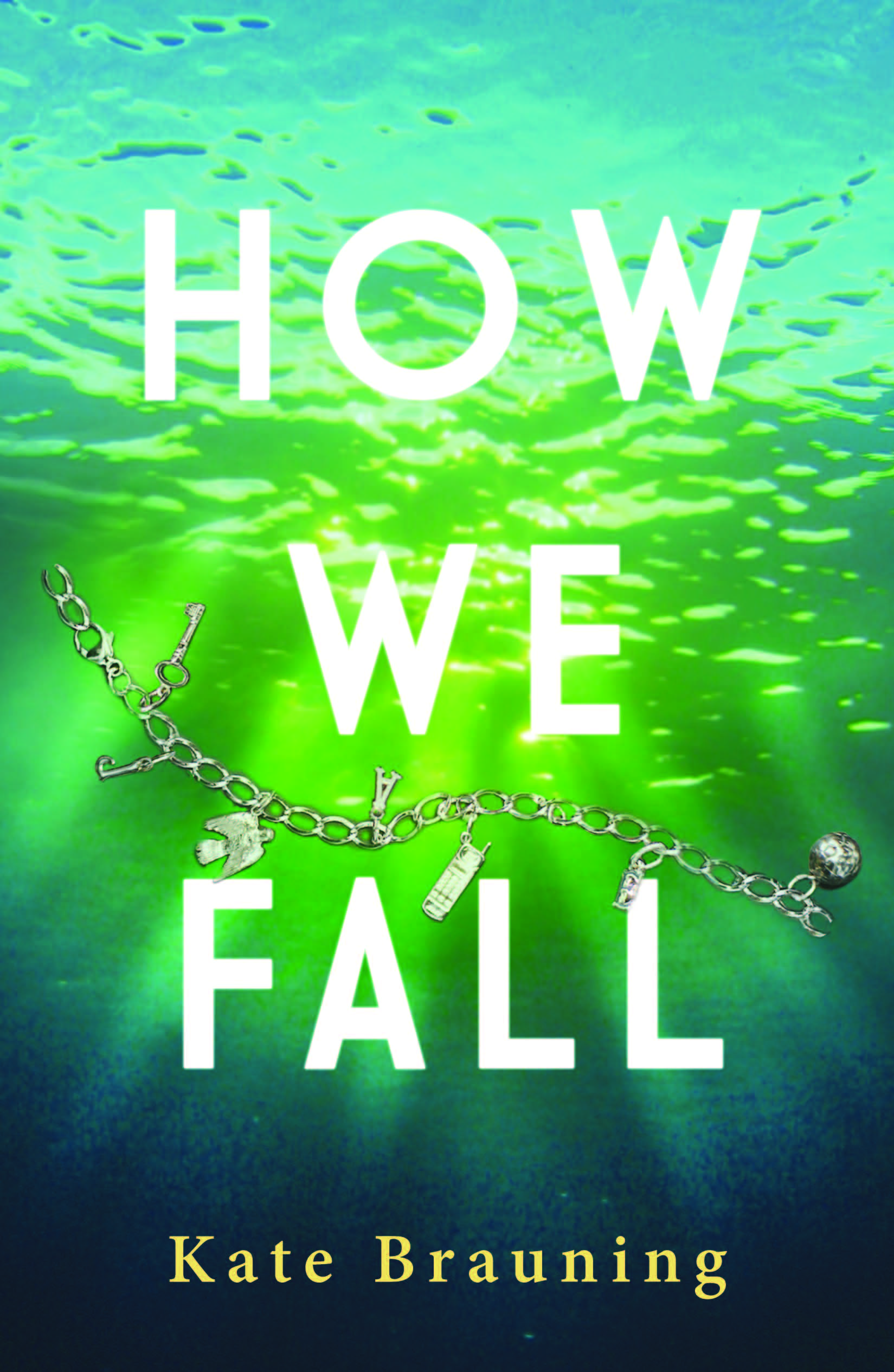
cover reveal: HOW WE FALL

Okay, it’s no secret that I have some pretty awesome critique partners. So when Kate Brauning, aka goddess of social media and Hemingway to my Fitzgerald (why no, I am not conceited at all), had her cover reveal for HOW WE FALL coming up, I was all over being a part of it.

This is a book that I was lucky enough to read before it got picked up for publication, and I’m so excited for Kate to get to share it. It’s suspense in the truest sense of the genre, and its sharp dialogue, snappy action, and keen imagery have definitely made it one of my favorites and most anticipated books of 2014. It’s been a pleasure getting to see this book evolve from agented to sold to on my shelves (and maybe on yours, too), and I’m stoked to get to be a part of HOW WE FALL’s cover reveal.

As a special added bonus, Kate’s also letting us post the first page of HOW WE FALL–so right away you guys can see how much fun Jackie’s going to be to tag along with come November. (Spoiler alert: she is a blast.)

Okay, enough with the introductions. Take it away, info and back cover copy!

HOW WE FALL by Kate Brauning

YA contemporary
Publication date: 11/11/2014
Publisher: Merit Press, F+W Media Inc.
ISBN-13: 9781440581793
Hardcover, 304 pages

He kissed her on a dare. She told him to do it again.

Ever since Jackie moved to her uncle’s sleepy farming town, she’s been flirting—a bit too much—with her cousin, Marcus. She pushes away the inevitable consequences of their friendship until her best friend, Ellie, disappears, and the police suspect foul play. Just when she needs him most, Marcus falls for the new girl in town—forcing Jackie to give a name to the secret summer hours she’s spent with him. As she watches the mystery around Ellie’s disappearance start to break, Jackie has to face that she’s fallen in love at an impossible time with an impossible boy. And she can’t let Marcus, or Ellie, go.

And now, the moment you’ve been waiting for… the reveal!


HowWeFallCover


Sneak Peek Page:

Chapter One
Last year, Ellie used to hang out at the vegetable stand with Marcus and me on Saturdays. This year, her face fluttered on a piece of paper tacked to the park’s bulletin board. Most weeks, I tried to ignore her eyes looking back at me. But today, Marcus had set the table up at a different angle, and she watched me the entire morning.

The day that photo was taken, she’d worn her Beauty and the Beast earrings. The teapot and the teacup were too small to see well in the grainy, blown-up photo, but that’s what they were. She’d insisted sixteen wasn’t too old for Disney.

The crunch of tires on gravel sounded, and a Buick slowed to a stop in front of the stand. I rearranged the bags of green beans to have something to do. Talking to people I didn’t know, making pointless small talk, wasn’t my thing. My breathing always sped up and I never knew what to do with my hands. It had been okay before, but now—surely people could see it on me. One look, and they’d know. Chills prickled up my arms in spite of the warm sun.

Marcus lifted a new crate of cucumbers from the truck and set it down by the table, his biceps stretching the sleeves of his T-shirt. Barely paying attention to the girl who got out of the car, he watched me instead. And not the way most people watched someone; I had his full attention. All of him, tuned toward me. He winked, the tanned skin around his eyes crinkling when he smiled. I bit my cheek to keep from grinning.

The girl walked over to the stand and I quit smiling.

Marcus looked away from me, his gaze drifting toward the girl. Each step of her strappy heels made my stomach sink a little further. Marcus tilted his head.

He didn’t tilt it much, but I knew what it meant. He did that when he saw my tan line or I wore a short skirt. I narrowed my eyes.

“Hi,” she said. “I’d like a zucchini and four tomatoes.” Just like that. A zucchini and four tomatoes.

Marcus placed the tomatoes into a brown paper bag. “Are you from around here?”

Of course she wasn’t from around here. We’d know her if she were.

“We just moved. I’m Sylvia Young.” The breeze toyed with her blonde hair, tossing short wisps around her high cheekbones. Her smile seemed genuine and friendly. Of course. Pretty, friendly, and new to town, because disasters come in threes.

“Going to Manson High?” Marcus handed her the bags.

She nodded. “My dad’s teaching science.”

Finally, I said something. “Three bucks.”

“Hmm?” Sylvia turned from Marcus. “Oh. Right.” She handed me the cash and looked over the radishes. “Are you here every day?” Her eyes strayed back to Marcus.

“Three times a week,” he said.

“I’ll see you in a day or two, then.” She waved.

I was pretty damn sure she wouldn’t be coming back for the radishes.

____

Pre-Order How We Fall: Books-A-Million, Barnes & Noble, Powell’s Books, IndieBound, Books Inc., Joseph-Beth Booksellers, Book Depository,
Amazon U.S., Amazon Canada, Amazon U.K., Amazon Germany, Amazon Japan.

Add How We Fall on Goodreads!


About the Author:

www.jenniophotography.com Kate spent her childhood in rural Missouri raising Siberian huskies, running on gravel roads, and navigating life in a big family. Now living in Iowa, she is married to a videographer from the Dominican Republic, and still owns a husky. She loves bright colors, fall leaves, unusual people, and all kinds of music. Kate has written novels since she was a teen, but it wasn’t until she studied literature in college that she fell in love with young adult books.  Kate now works in publishing and pursues her lifelong dream of telling stories she’d want to read. Visit her online, on Facebook, or on Twitter.